Digital
Digital marketing assets are often the first customer touchpoint for a product launch. The work requires speed, accuracy, and consistency across multiple platforms and formats, often under tight timelines and shifting launch requirements. My role has centered on delivering production-ready digital assets that align with brand standards while supporting coordinated launch execution across retail, web, and partner channels.
Online Marketing
These programs required coordinating with product marketing, channel teams, and external partners to ensure all digital assets were accurate, on-brand, and available across platforms at launch. The work demanded disciplined file management, version control, and rapid execution to support synchronized global product releases.
Project: Product Launch Digital Campaign Assets
Role: Creative Director, Senior Designer, Project Manager
Scope: Designed and delivered product-specific digital marketing assets supporting launch-day readiness, including eblasts, web banners, digital store graphics, and Amazon Basic and Premium content formats across multiple product lines
Brands: SanDisk, SanDisk Professional, G-Technology, WD_BLACK, and Virtually Live
Timeline: 1–2 weeks
UI/UX
Designing user experiences in emerging technologies requires translating abstract concepts into clear visual interactions that developers, stakeholders, and partners can understand and build from. My work in UI/UX has focused on creating practical design frameworks and visual storyboards that guide product development, clarify user behavior, and support cross-functional decision-making during early-stage product development.
Project: Virtual Environment User Experience and Interface Design
Role: Creative Director, Senior Designer, Project Manager
Scope: Partnered with product developers and engineering teams to design UI and UX features and create visual storyboards illustrating how spectators interact within a live, fully virtual event environment
Timeline: 1–6 weeks
This work required balancing creative exploration with technical feasibility, ensuring the user experience could be clearly communicated to developers and stakeholders while supporting rapid product development cycles in a new and evolving technology space.
StoryBoards: Invoking the HUD in VR
Viewer action: When one trigger is activated, an indicator of the HUD appears as a sphere.This is not the full HUD. This sphere will hover over the top of the controller being activated.
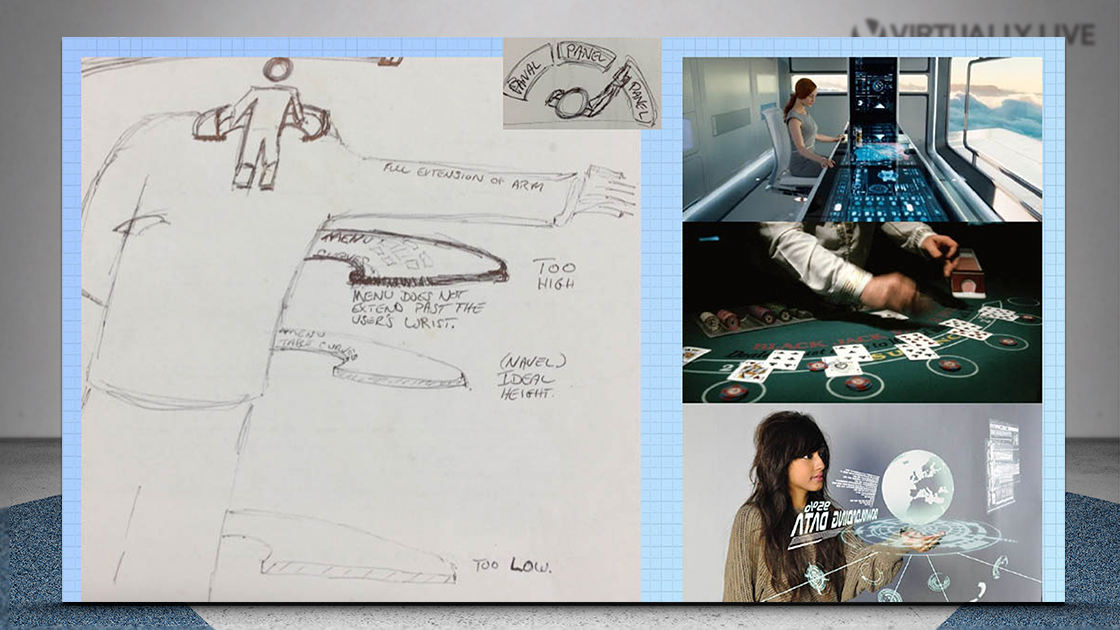
Viewer action: The viewer reaches forward to the HUD. The controllers snap into either side of the sphere, allowing the HUD to be pulled open. If the viewer releases the triggers before the HUD is fully open, the the HUD will return to the sphere.
Viewer action: the viewer fully expands the HUD to fill the full point of view. Everything outside the HUD is blurrred. The HUD is almost a portal into the race. The HUD flexes and bends slighly as the viewer moves the HUD.
Viewer action: The viewer pushes the HUD into the virtual wall to stick the HUD in place. The controller is used to select sections for race information or navigation to other parts of the course.
StoryBoards: Product design documentation
Viewer action: in the VR lobby, the viewer choses a SOCIAL experience where they can interact with other viewers in the live, VR environment.
Viewer action: the virtual table projects key landmarks from the races. The viewer selects the race experience happening in Buenos Aires and will materialize in the virtual lounge overlooking that race. The center countdown shows the live race starts in 33 minutes, 27 seconds.

Viewer action: using the left controller to pull up the navigation options, the user selects a location on the track to watch the race with the right controller. The user will materialize at that location.
Viewer action: using the left controller, the user pulls up the Time Controls. Using the right controller, the user can reverse, freeze or advance time in the virtual space. The user can relive specific moments in the race from any angle the choose.
Customized Experience Rooms
BMW Experience Room: users in the virtual room interact with BMW multimedia walls and a virtual demo experience of BMW products. The walls feature BMW content including social media channels, video feeds, product education, etc
Twitter Experience Room (sports): users in the virtual room interact with various sports active on Twitter. The Twitter icon acts as a portal to other subsets within the Twitter-verse including, music, movies, television, politics, art, etc.

NeuroPro Industry Conference: live video from the conference is accessed on the virtual walls, providing the user a deeper dive into the speaker’s contents in real-time.
NeuroPro Industry Conference: deeper dive into the content, access to social media feeds and live space for users at the conference to interact with one another in real-time.
Front-end Website design
I developed the overall look and feel for Virtually Live and the consulting firm BVA. Additionally, I optimized the site’s UX for a cleaner, more focused information flow.
e-Publishing
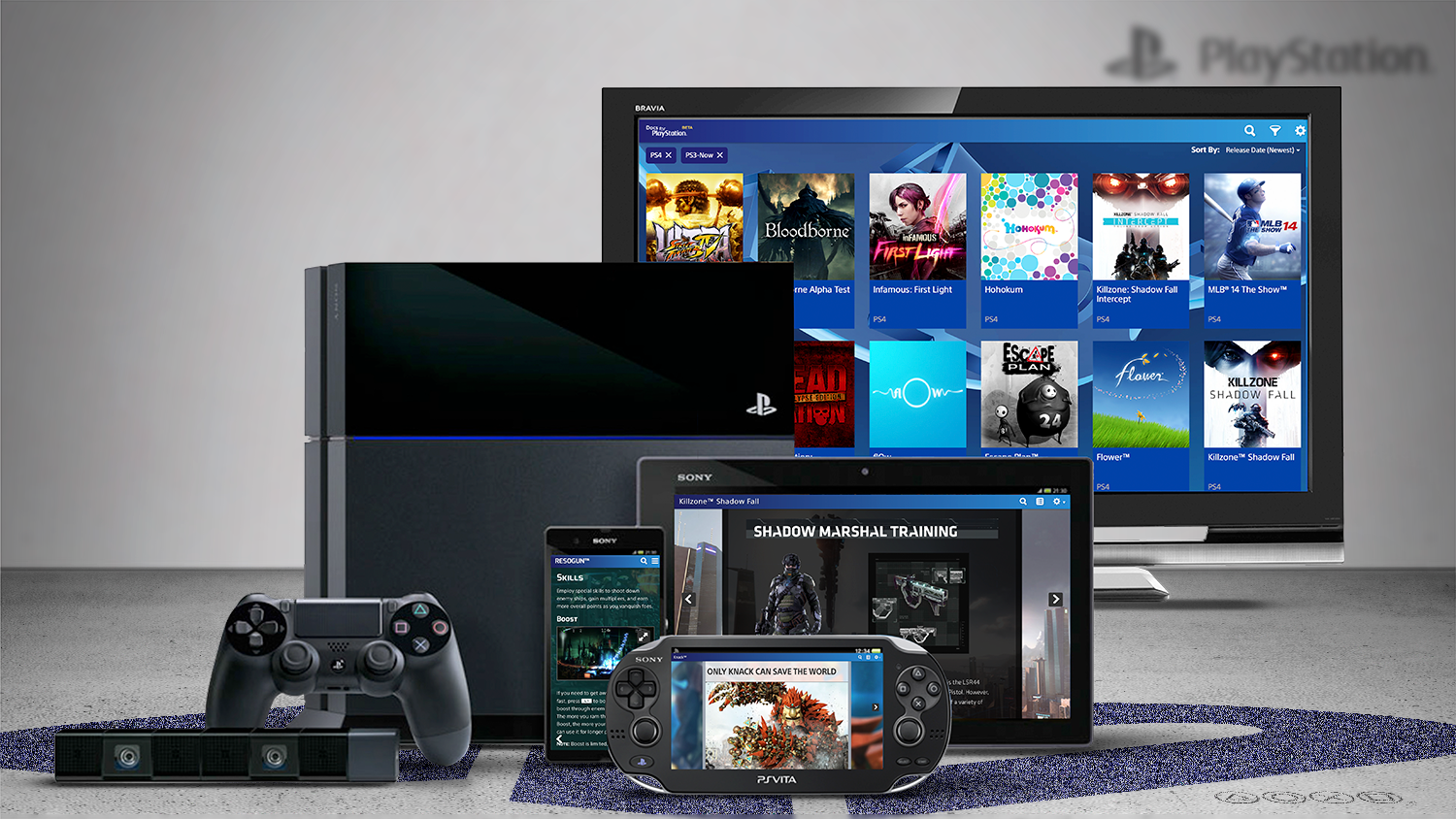
As digital distribution expanded, PlayStation needed a more efficient way to deliver game manuals that improved the user experience while reducing production and distribution costs. I led the transition from printed manuals to a fully digital publishing system integrated directly into the PlayStation platform.
DOCS for PlayStation replaced traditional printed manuals with a native digital experience accessible across devices, improving usability for players while delivering significant operational savings.
Project: DOCS for PlayStation — Digital Game Manual Platform
Role: Creative Director, Project Manager
Scope: Led the design and development of a digital publishing system for PlayStation game manuals, integrated into the platform architecture and accessible across multiple devices
Timeline: 7 months prior to the PlayStation 4 launch
The transition to digital-only manuals improved the player experience, simplified content updates, and reduced printing and distribution costs by approximately $1.5 million annually. Because the solution was built directly into the PlayStation system architecture, DOCS for PlayStation delivered greater stability and reliability than a third-party add-on.